

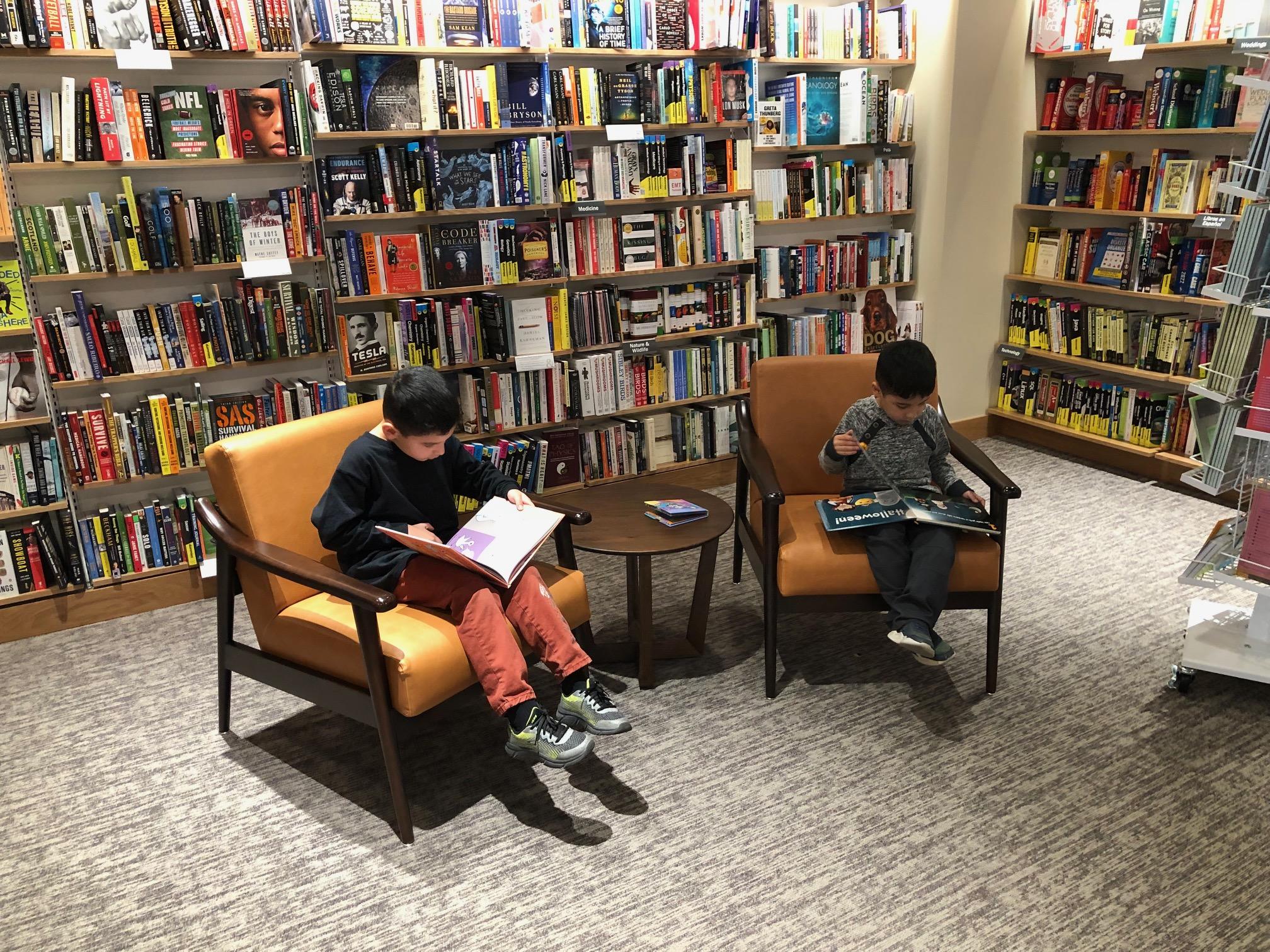
Literacy–the ability to read, write and understand written language–opens the doors to the rights we should all undoubtedly have: education, equality, and opportunity. Without being able to read, opportunities in life are limited. Life is harder. As an English teacher, I wanted to share some tips on improving your children’s literacy.
I cannot remember a time when I did not read. All my life, I’ve been surrounded by books, encyclopedias, dictionaries, magazines, newspapers, and all other sorts of print materials. I have to give props to my parents because, my gosh, I read everything I had before me. The ability to read built the foundation within me to attain more knowledge and skills, not only contributing to my own intellectual fulfillment and education, but also allowing me to become a contributing member of society. I was lucky to be born into a family, a community, and a country that allowed me the opportunity to become literate.
Words made me who I am, and it’s a big reason why I became a teacher.
But while I was fortunate, many are not. The global reality is that millions of people around the world cannot read.
Can you imagine living in our society without being able to read even the most basic things, such as a street sign or a coffee shop menu (and I know some of those coffee menus are overwhelming!)? Or reading a simple story and not being able to understand why a character behaved in a specific way without it being stated in the text? That is the reality that more than 750 million adults around the world face, “including the United States, where an estimated 32 million American adults are illiterate.”
According to the National Literacy Institute, “54% of U.S. adults read below the equivalent of a sixth-grade level, and 64% of our country’s fourth graders do not read proficiently.” According to the Institute for Multi-Sensory Education, a leading organization that trains teachers how to teach reading more effectively, “Children who have below basic reading skills in third grade are six times as likely to fail finishing high school on time.” Not being able to read effectively fails to set up children for success.
September 8th marks UNESCO’s International Day of Literacy, declared and commemorated almost 60 years ago. Every year on this day, an awareness campaign for improving literacy takes place all over the world. Individuals, organizations, and institutions take it upon themselves to do something to remedy the problem of illiteracy. Policies are developed, campaigns are started, awareness is spread. As parents, this is an issue that we cannot leave only to teachers or schools to address; we must take responsibility for our children’s literacy as well.
What can you do to help right now?
Here are just three easy tips for improving your kids’ literacy. These tips can be implemented with any young reader. Actually, these easy tips work for all readers, whether they struggle with reading or not, young or experienced.
1. Keep Their Eyes on the Page
In order to improve your kids’ literacy, you must read the right way. As you read with your child, encourage them to keep their eyes on the words as they read. Struggling readers often glance at a word or a sentence briefly and then look up before they finish reading the actual word in the text, guessing what they think follows. This may happen because they are not confident and seek approval, or they are unfamiliar with the word. It may happen because they are struggling to decode the letters. Encourage your child to look at the words, maybe even use their finger or a pencil to track their place as they read to build the habit of reading the actual words, and not what they are guessing.
2. Make Reading a Visible Habit
Yes, read, we all know this one! In order to improve your kids’ literacy, you must read. But this tip goes a little bit further.
I want you to make reading very visible in your day-to-day life.
Read to your child, read with your child. Encourage your child to read independently or with friends or siblings. Let them “catch” you reading for fun, for learning something, or for practical purposes, like putting together a new table from Ikea.
What if I’m not a reader, or if I’m not good at it?
It’s okay! Read anything, read everything! Read something big or something small. Read silently, on the couch, or read out loud as you go about your day. Baking a cake? Read the directions out loud. Driving somewhere? Read street signs, names of stores, and billboards. I know it may make you feel silly to narrate words you see everywhere, but the point is to make reading a constant presence for your child. Words are everywhere, so point them out as you read them out loud.
And honestly, the more you read with or without your child, and the more you follow these tips, the better you will get at reading, too. You or your child might begin to love reading because it gets easier.
That’s the beauty of these easy tips to improve literacy; you can use them for yourself as well.
3. Make it active–Interactive, that is!
In order to help improve your kids’ literacy, you should also engage in conversation about the reading while reading. Stop sporadically and ask questions. Discuss and dialogue after you read. Higher-level thinking questions, those that ask how and why, are great. Those questions that ask the things the text doesn’t say outright. Especially if you are reading stories or novels. Ask how your child knew Jessica was angry with Billy Bob? What about her face, the way she said her words, or her actions, made it obvious? Try not to take “IDK, I just knew” for an answer. You can also throw them a bone once in a while and tell your kiddo the answer. A phrase like “Oh, we know the teacher is mad because her face got all red and splotchy, and she stomps away to the principal!” Then ask your kiddo what he or she thinks the teacher will tell the principal.
You are teaching your child how to infer based on what the text does NOT say. The more you build habits like asking questions, the more your child will think critically the next time they are reading something independently.
With younger readers, you can also ask a few text-based questions to make sure they are understanding what they are reading. If the story says Johnny threw the red ball into the neighbor’s yard, ask your kiddo what color the ball was, who threw it, and where (one question at a time, though! Don’t overwhelm them either). Then you can also say things like “I wonder why he did that!” to create interest in your child. If your child cannot answer a question the first or second time, teach them to go back and reread the sentence. Ask the question, and reread the sentence together for the answer. Repeat this process consistently until you can get to those higher-order questions.
The ability to read is a great predictor of success in life, and as parents, I’m sure we all want what’s best for our children.
That includes literacy. It’s never too late to do something about it. Using these easy tips for improving literacy will help.
What do you remember about your reading experiences as you were growing up? Did reading come easily to you, or did you struggle? What’s your relationship with literacy now?