
With today being World Autism Day, I wanted to take the time to discuss what Autism is by telling you what it isn’t. Before we get into that, let’s define Autism. According to the National Institute of Mental Health, Autism is a neurological and developmental disorder that affects how people interact with others, communicate, learn, and behave. Although autism can be diagnosed at any age, it is described as a “developmental disorder” because symptoms generally appear in the first two years of life.
As the parent of an autistic child, Autism is an integral part of my life. When I talk about Autism, I often use my son as my frame of reference since my lived experience is related to his. I do not speak for autistic individuals themselves, nor do I speak directly for my son. What I can speak to is my 8 years living adjacent to Autism and how it has impacted my life and how I see the world.
Autism Isn’t a Superpower
You will often see people try to inject positivity by saying that Autism is a superpower. It’s not. But it’s not a negative either. Autism is just a different way of thinking or taking in the world around you. Listen, my son taught himself how to read at 3.5 years old which could be interpreted as his own superpower. That said, he’s 10 years old and still struggles to handwrite his name. Does he know how to read and spell his name? Absolutely! But his hands don’t work the way he wants them to, which makes it incredibly difficult for him to write by hand. If we just focused on his precocious reading abilities maybe we could call autism a superpower, but it seems to devalue that they also struggle.
Autism Isn’t a Curse
Look, the struggle is real. It’s real for him. It’s real for me. It’s real for our whole family. We have shaped our lives to accommodate him. We have a constant supply of chicken nuggets in our freezer, and an industrial sized container of M&Ms in our pantry. We NEVER run out. We have a VERY specific multi-step routine that we follow for school drop off and pick up, including making sure our car is parked in the same spot EVERY time. Any change, no matter how slight, can derail the routine and make any activity exponentially more difficult. The anxiety I have as a parent to make sure I’m as consistent as possible is a struggle.
 The struggle doesn’t make Autism a curse! Yes, I have anxiety. I also have become a more patient and compassionate person. I have watched my son struggle with and overcome things that a typical parent may not understand. I see the world through a different lens now that I have disabled children. I have learned to step back and appreciate the small things. I have learned to let go of control. I have learned what battles are worth fighting and when to sit back and let things happen.
My son has taught me to be a better person. He has taught me to see beneath the surface and accept others for who they are and what they bring to the table. My daughter, who is also disabled with a rare genetic condition with an autistic presentation, taught me to find my voice and trust my gut. These are lessons that were needed. How could Autism be a curse when it has taught me so much?
Autism Isn’t Linear
This is one that really gets under my skin. You will hear people refer to autistic children, or autistic adults, as high functioning or low functioning. I will tell you, based on those descriptors, both of my children would be considered low functioning. My son is not conversational in his speech, he is what they call a Gestalt Language Processor. He communicates using words and phrases he has gathered from his favorite movies and videos. But like I mentioned above, he taught himself to read at 3.5 years old. If you ever get the chance to engage with him, you can feel how intelligent he truly is, we just haven’t unlocked his ability to communicate. As we continue to work on that, as well as address his sensitive sensory system, we see just how much he is capable of. To label him as low functioning would have people assume that he doesn’t have a higher level of intelligence. On the flip side, for children who are labeled as high functioning it is assumed that they don’t need support even if they do. We choose to say that our children have high support needs, which is an honest reflection of what they need to function in society rather than how society views them.
Autism isn’t just for children
My son was diagnosed with Autism at 22 months. He is now 10 years old. In a decade, he will be 20 years old and he will still be autistic. People were much kinder and more willing to accommodate his needs when he was first diagnosed. It has gotten progressively worse as he has gotten older. He hasn’t changed. In fact, he has improved! When he was diagnosed, he was nonspeaking. He would have weekly meltdowns. He still struggles with impulse control and emotional regulation, but he has shown a ton of improvement in recent years and especially the last few months. All of this to say that we work very hard to teach him the skills he will need to be a functional member of society, especially when he reaches adulthood. But he will reach adulthood and he will still be autistic and he still may need accommodations to meet success. We as a society need to stop viewing Autism as something that only impacts children.
Autism isn’t Curable
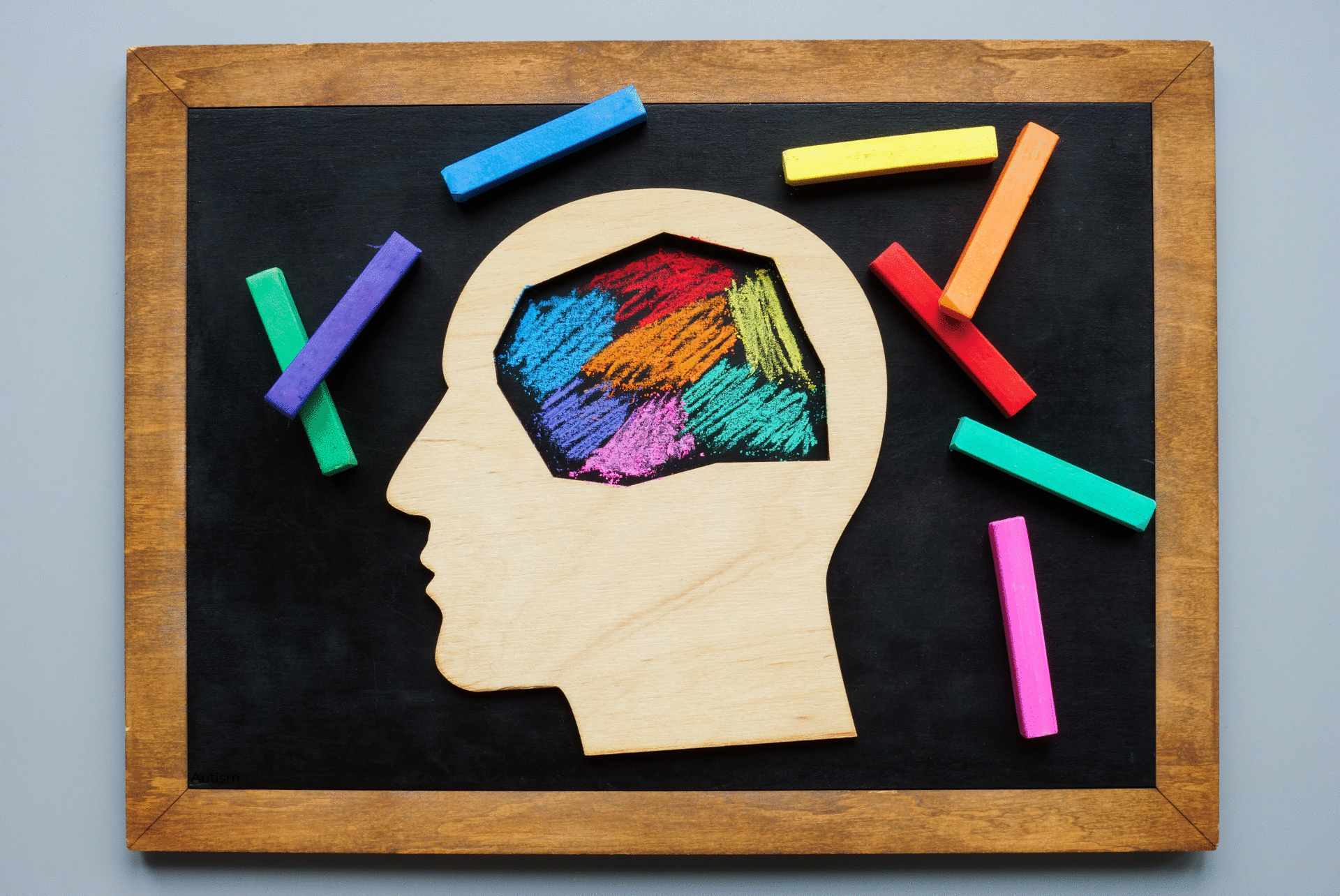
This speaks to my last point. Autism is a different neurotype. According to the Association for Autism and Neurodiversity, a neurotype is a fundamental aspect of a person’s identity that pertains to how their brain learns, communicates, and develops. More specifically, the term “neurotype” can be used to describe the kind of brain a person has or identifies as having. Neuro- meaning brain, and type- meaning what kind. It’s important to recognize that all neurotypes are equally valid, without any one being “better” or “worse” than another. Just like we can’t permanently change the color of our eyes, or the color of our skin, we can’t change the fundamental aspects of a person’s brain. That’s not to say that the brain doesn’t evolve and change over time, because it does for all people, but the foundations of brain function still remain. Rather than trying to “cure” autistics, we should be trying to figure out ways to highlight the strengths of their neurodiversity and accommodate their needs whenever possible. One way to do this is by teaching children how to be inclusive. If we start when they are young, it will feel more natural to include everyone.
Autism isn’t a Puzzle

The puzzle piece has become an area of contention in the autistic community. There is a long standing history with this particular symbol as well as quite a bit of controversy. Regardless of how you feel about it, due to its history, it is often the most recognized symbol for autism. If you question the many autistic adults, they prefer the infinity symbol as a representation for autism. For more information on the puzzle piece debate, I’m going to defer to an article from the National Library of Medicine titled Do puzzle pieces and autism puzzle piece logos evoke negative associations?
Autism isn’t Content
More specifically, autistic people aren’t content unless autistic people decide they are content. What I really mean is, as a parent, I’m not here to use my child for clout, likes, or views. In 8 years when my son is 18, or maybe sooner, and he is able to make the decision for himself to publicly talk about his life and experiences, I’ll be open to discussing that with him and support him however I can. It will be his choice. What you will never see is me publicly posting a video of him having a meltdown. Honestly, I barely post about him much at all because he is not able to consent to it. The grey area comes in when parents share their experience of raising an autistic child, without featuring the aforementioned child. They are speaking to THEIR experience, and in these situations I often find that the parent is speaking to the struggles they have with society’s acceptance of autism, not the struggles of their child.
What I hope you take from all of this is that autistic children and autistic adults are amazing people who bring unique gifts to the world. The struggles that they experience are individual and universal all at the same time. Ultimately they want what anyone else wants, love and acceptance. So starting today, especially since it’s World Autism Day, make an effort to be more compassionate and more inclusive to autistic people and all disabled people.